

Chantel Lewis on Leading Sport Inclusion Australia into its 40th Year
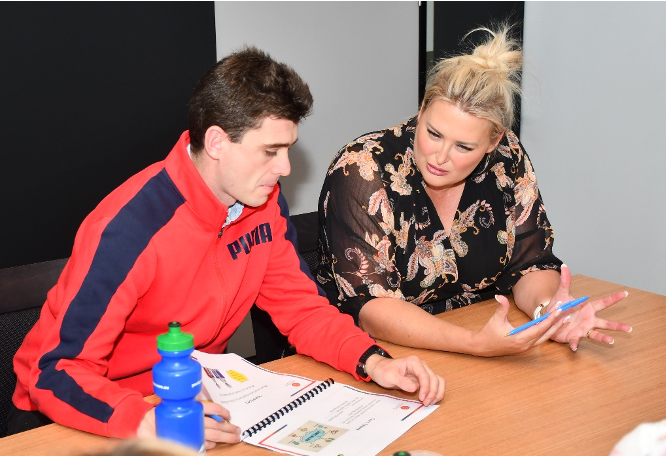
ASAPD recently had the opportunity to ask Sport Inclusion Australia’s new CEO, Chantel Lewis, a few questions as the organisation celebrates 40 years of pioneering inclusive sport for people with an intellectual impairment, including intellectual disability and/or autism. As a founding member of the Australian Sporting Alliance for People with a Disability (ASAPD), Sport Inclusion Australia plays an important role in strengthening inclusive sport pathways across Australia and the region.
You’ve just stepped into the CEO role at Sport Inclusion Australia. How are you feeling as you begin this new chapter?
I feel incredibly proud. Sport Inclusion Australia has a strong 40-year history and stepping into this role is about respecting that legacy while also recognising the opportunity ahead. It’s an exciting time, not just for the organisation, but for the broader sport system and I’m motivated by the role we can play in shaping more inclusive, sustainable pathways nationally and across the region.
You’ve worked in disability and inclusive sport for many years. What are one or two experiences or lessons that have really shaped how you lead today?
One of the biggest lessons for me is that inclusion only works when it’s owned by the system not delivered as an add-on. Sport needs to lead sport, and our role is to build the capability and confidence within that system to do it well.
I’ve also learned that we need to move beyond participation-only thinking. The athletes we work with are athletes first, with aspirations, talent and high-performance goals, and our systems need to reflect that.
That has really shaped how I lead today: I focus on clarity, collaboration and building capability, working alongside partners to create sustainable change, rather than short-term solutions.
For those who may not be familiar with Sport Inclusion Australia, how would you describe the organisation’s purpose in one or two sentences?
Sport Inclusion Australia is a national leader in sport. Our role in enabling inclusive sport systems for individuals with an intellectual impairment – including intellectual disability and/or autism.
We lead national eligibility, strengthen pathways and build the capability of sports to deliver meaningful inclusion at all levels, from grassroots through to international competition.
Why is having a national body like Sport Inclusion Australia so important within Australia’s sport system right now?
Sport Inclusion Australia has always been, and will continue to be, important because it provides consistency, clarity, integrity and confidence across the sport system.
As expectations around inclusion continue to evolve, sports are increasingly responsible for building and delivering inclusive pathways. Our role is to support that by ensuring a nationally consistent approach to eligibility, strengthening clear and visible pathways, and building the capability within sports to deliver inclusion with integrity and fairness, so no one is left behind.
You’re only the second CEO since Sport Inclusion Australia was founded. How does that legacy influence the way you’re approaching the role?
It’s something I take very seriously. The stability and commitment that have shaped Sport Inclusion Australia over 40 years are a real strength.
My focus is on building forward from that foundation, not changing direction for the sake of it, but evolving the organisation to meet what the system needs now and into the future. That includes strengthening partnerships, increasing our impact, and ensuring our role is clearly understood and valued across the sector.
Having already worked within Sport Inclusion Australia for several years, what fresh perspective do you feel you bring as CEO?
The organisation has never wavered from its core purpose and that will remain central to who we are and what we do.
We’re not here to replace sport, we’re here to support it. That means being clear about where we add the most value: leading eligibility, education and awareness, safeguarding, athlete leadership, strengthening pathways and building capability across the system.
My focus is also on strengthening how we measure and communicate impact and building on 40 years of pioneering inclusion, ensuring our work is clearly understood, valued, and invested in for the long term.
You’ve spoken about alignment, sustainability and measurable impact. What do those principles look like in practice for Sport Inclusion Australia?
For me, alignment, sustainability and measurable impact are about how we work alongside the system in a practical way, across sport, education, government and high performance.
Alignment means we take the time to understand what our partners are trying to achieve and make sure what we’re doing supports that, not adding another layer, but helping bring clarity and direction across the system.
Sustainability is about making sure inclusion isn’t reliant on one person or one program. It’s about building confidence and capability within sports, schools and communities so they can deliver it themselves, consistently and over time.
And measurable impact means we’re clear on what success looks like, whether that’s more athletes coming into the system, stronger and more connected pathways, or progression through to higher levels, and being able to show that in a way that matters to our partners.
Where do you see the biggest gaps in inclusive sport pathways for people with intellectual impairment, and how is Sport Inclusion Australia working to address them?
One of the biggest challenges is ensuring there are clear, connected and visible pathways for individuals with an intellectual impairment, particularly between school, community sport and high performance. The talent is there, but too often the opportunity isn’t, because those pathways aren’t always well understood or aligned.
There’s also an opportunity to continue building confidence and capability across the system in supporting athletes with an intellectual impairment. Many sports are committed to inclusion, but often they don’t have are the resources, education, lived experience – and therefore confidence in their capability – to deliver.
That’s a gap and one that we can help with. Our role is build stronger relationships and partnerships across sport to support and enable that commitment to inclusion by strengthening the knowledge, systems and structures needed to deliver it consistently and with integrity.
We lead national eligibility systems to provide clarity and fairness, build more visible and connected pathways through initiatives like Included Through School Sport, and work alongside sports, educators and partners to strengthen capability across the system.
We’re also extending this beyond Australia, strengthening international pathways through our connection with Virtus and supporting regional development, particularly across the Pacific.
With Sport Inclusion Australia celebrating 40 years this year, how are you balancing honouring the organisation’s history with driving future-focused change and innovation?
It’s about respecting the legacy that has shaped SIA over 40 years, that foundation is what gives us credibility and trust across the system.
But it’s equally about building forward. We’re taking that experience and evolving it to meet what the system needs now and into the future, scaling our impact, modernising how we work, strengthening partnerships, and positioning Sport Inclusion Australia as a national leader in inclusive sport capability, not just service delivery.
Are there any current or upcoming initiatives you’re particularly excited about, and why?
There are a number of initiatives I’m really excited about, both nationally, regionally and internationally, because they reflect how inclusion is being embedded across the system, not delivered in isolation.
At a national level, we’re continuing to build momentum through initiatives like Included Through School Sport, alongside athlete leadership and mentoring programs. These are critical in strengthening the pipeline, ensuring athletes are not only entering the system, but progressing, staying connected, and having opportunities to lead.
Regionally, we continue to be supported by the Department of Foreign Affairs and Trade to expand our impact across Oceania through the Included Through Sport – Solomon Islands project, using athletics to unlock opportunity for people with disability. My role on the Oceania Paralympic Committee Board ensures Sport Inclusion Australia stays deeply connected across the region, because stronger regional collaboration drives stronger outcomes at home.
We also have two major international multi-sport events coming up, the 2026 Virtus Asia Oceania Games in Bangkok Thailand and the 2027 Virtus Global Games in Cairo, Egypt, and we’ll be supporting a team of athletes to compete and represent Australia.
These events are important not just from a competition perspective, but because they strengthen international pathways, deepen our relationships with sport, and create real opportunities for athletes with an intellectual impairment to perform on the world stage. For many of our athletes, Virtus events are the highest level of competition.
We continue to work closely with national sporting organisations, education partners and government to support their inclusion priorities, while progressing international projects across the region.
What excites me most is that this work is becoming embedded, we’re seeing stronger alignment, clearer pathways, and growing capability across the system. That’s where we see real, sustainable impact, and where the opportunity lies to continue to scale this work.