Boccia Athletes Among Para Athlete Barrier Fund Recipients: Breaking Down Barriers in Australian Para-sport

A yellow and green Boccia Australia Logo with a white background. The logo shows a figure of an athlete in a wheelchair throwing a boccia ball and the wording states 'Boccia Australia'

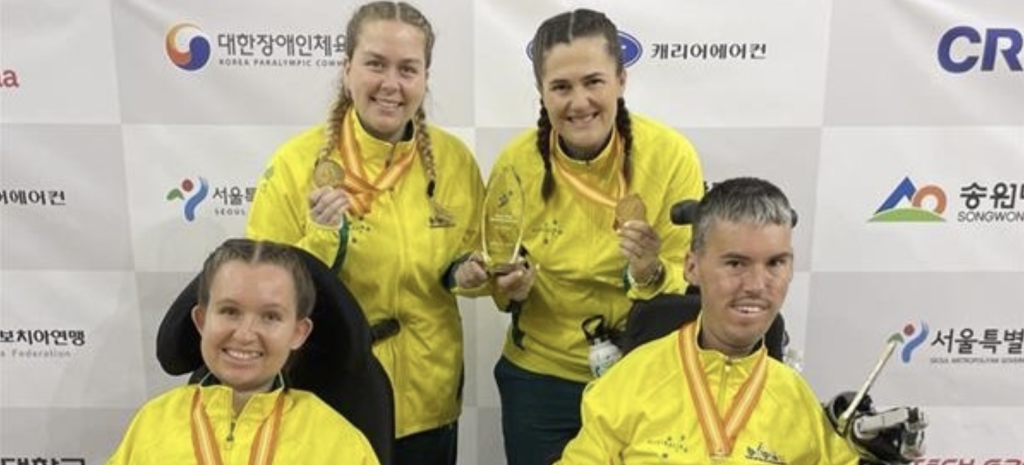
The Para Athlete Barrier Fund, part of the Australian Government’s Para Uplift initiative, awards up to $4,000 to help Para athletes cover costs like equipment, travel, and support needs, directly addressing real challenges identified through extensive research. Boccia Australia is proud that athletes Dylan Schwarz, Ashlee Maddern, Jean-Paul La Fontaine, and Lachlan Kavanagh have received this support, enabling them to focus on training and performance.

The government has doubled its investment to $54.9 million, aiming to boost athlete development and success ahead of the Brisbane 2032 Games by enhancing coaching, training, and classification systems. Minister for Sport Anika Wells emphasized the grants are crucial for 122 athletes to pursue their dreams in sport, ensuring they have the resources to reach their potential.

Teen soccer player Ruby Miller fundraising for Deaflympics debut

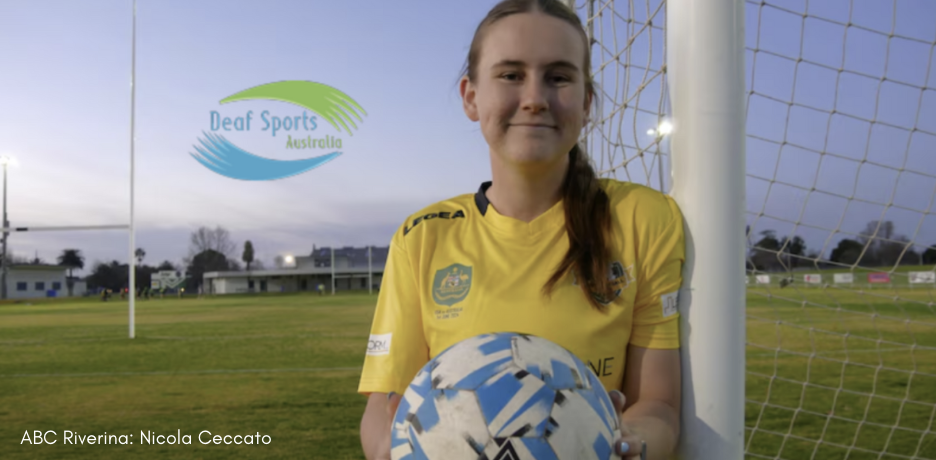
Image shows Ruby Miller in a yellow shirt holding a soccer ball and leaning against a soccer goal. There is the Deaf Sports Australia logo next to her. At the bottom of the image, it states "ABC Riverina: Nicola Ceccato"

Ruby Miller, 17, is set to represent Australia in women’s deaf soccer at the upcoming Deaflympics in Japan, but must raise $10,000 to fund her trip since athletes pay their own way. Her family is running local fundraisers, including selling socks and wood, and seeking sponsorships.

Unlike Olympians and Paralympians, deaf athletes receive limited government support, so community donations and grants are essential for making participation possible. Ruby is determined to succeed despite the challenges and is training hard for the event.

A second chance at life sees siblings represent Australia at World Transplant Games

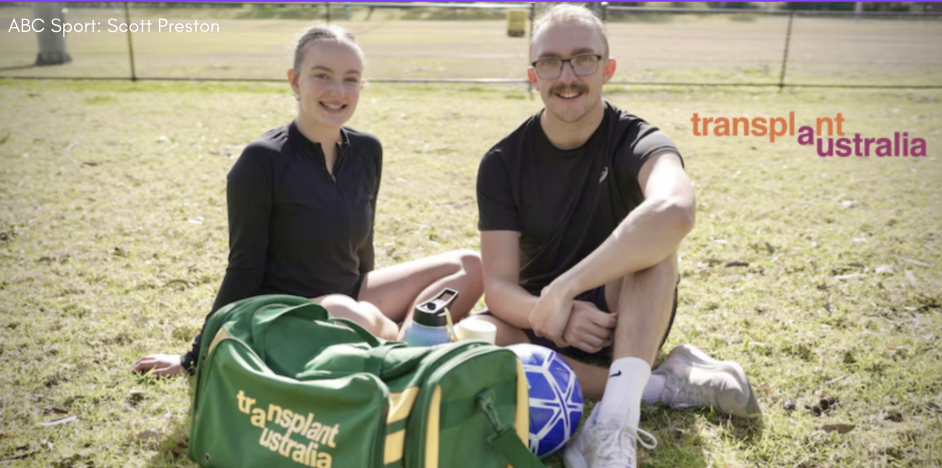
Two siblings in black athletic clothes are sitting on the grass in a sunlit outdoor field, with a blue soccer ball and a green and yellow sports bag labeled "transplant australia" in front of them. The Transplant Australia logo appears in orange and purple text on the right side of the image.

Emma, 18, and Jacob Evans, 20, share a powerful bond forged through a lifetime of illness. Born with a rare autoimmune condition that limited their life expectancy to just 30 years, the siblings spent much of their childhood in hospitals undergoing treatments and trials.

In 2020, Jacob received a groundbreaking transplant, with Emma following a year later. The procedures transformed their lives, giving them the chance at longer, healthier futures.

“These two incredible people have built resilience, have built coping skills, are each other’s best friends,” Steve Evans said.

Now, the pair are representing Australia at the World Transplant Games in Germany. They’ll team up in six-a-side soccer, while Emma also races in the 5km run and Jacob competes in golf.

Transplant Australia – Team Australia is heading to the World Transplant Games

The graphic displays two logos side by side. On the left, the logo for the 2025 World Transplant Games in Dresden, Germany features silhouettes of Dresden landmarks, a dynamic figure, and bold text reading "DRESDEN 25 WORLD TRANSPLANT GAMES GERMANY," with the "M" in "GERMANY" shaded with the German flag colors. On the right, the Transplant Australia logo presents the words "transplant australia" in a mix of orange and purple lowercase letters on a dark background, with "australia" partially overlaying "transplant."

Transplant Australia is preparing Team Australia for the 2025 World Transplant Games, taking place in Dresden, Germany on August 17 to 24.

Transplant Australia has the honour of sending the national team to this inspirational global event. 

The World Transplant Games offer a unique opportunity to celebrate organ donation on the international stage, represent your country, and create lifelong friendships and memories. 55 countries come together and participate in the largest sporting event for transplant recipients worldwide. Staged every two years in different cities by the World Transplant Games Federation, the Games unite thousands of recipients, supporters, and donor families from around the globe. 

Softball Australia and Disability Sports Australia Partnership

The image features two logos on a green background. On the left, the Softball Australia logo shows a stylized figure pitching a ball with the words "SOFTBALL AUSTRALIA." On the right, the Disability Sports Australia logo features a dynamic, abstract athlete within a shield above the text "Disability Sports Australia."

Softball Australia and Disability Sports Australia (DSA) are pleased to announce a new partnership via DSA’s Sports Incubator Program.

This partnership represents a significant milestone in Softball Australia’s efforts to enhance diversity and inclusion throughout the sport. With support from DSA, Softball Australia will strengthen its workforce’s capability, promote inclusive participation opportunities, and create welcoming environments for people with disability both on and off the field.

Softball Australia will benefit from specialised support through the program, such as a workshop focused on disability inclusion, joint promotion of DSA’s Accessibility Champion course, and the chance to participate in inclusive sporting events nationwide through the Abilities Unleashed initiative.

Are you taking the plunge for Special Olympics Australia?

A stylized illustration of a polar bear wearing a blue scarf, depicted in a playful and welcoming pose with simple black outlines and blue accents.

The water’s cold. The cause is powerful. And we need you!

From 19 July – 10 August, Australians will be taking the plunge for inclusion – the Polar Plunge! And there’s still time for you to join them. Whether you plunge, donate, or cheer from the sidelines, it’s your chance to be part of something bold and meaningful.

Each year, hundreds of Australians take part in Polar Plunge in support of Special Olympics Australia, raising vital funds and awareness for athletes with intellectual disability and/or autism. Whether you’re plunging solo, joining a team, or cheering from the sidelines with a donation, you’ll be helping to create a more inclusive world for all, driven by the power of sport.

“The Polar Plunge is one of the most powerful ways we can bring people together – not just to raise funds, but to build awareness, celebrate inclusion, and show what’s possible when the community stands behind our athletes,” Special Olympics Australia CEO Jamie O’Connor said.

Meet our new National Integrity Manager: Ross Ashcroft

A graphic with an orange and navy blue background announces a new National Integrity Manager. It features icons of balanced scales, a shielded person, and a group of people inside a circular arrow. The text reads: "MEET OUR NEW NATIONAL INTEGRITY MANAGER: Ross Ashcroft."

We are delighted to welcome Ross Ashcroft as our new National Integrity Manager at the ASAPD. Ross brings a wealth of knowledge and a unique perspective, shaped by a global educational journey and a commitment to human rights, justice, and inclusion.

Ross’s educational background is as diverse as his international experiences, spanning five countries—Australia, Singapore, China, Germany, and Canada. With nine tertiary qualifications, his expertise covers areas such as Law, Chinese language and culture, Islamic studies, Occupational Health and Safety (OHS), and High-Performance Sport. Additionally, he holds vocational qualifications in sports massage, personal training, strength & conditioning, and athlete well-being.

With a foundation in academia and law, Ross has been a dedicated advocate for human rights, justice, procedural fairness, and inclusion throughout his career. His journey led him to the world of sports, where he actively participates in local, national, and international events, serving in athlete support roles.

Ross’s commitment to integrity and inclusion in sports is evident through his involvement in key events such as the INAS Games 2019, OA Virtus Games 2022, and the Virtus Global Games 2023 in Vichy. These experiences not only showcase his dedication but also highlight his understanding of the needs of athletes in various settings.

Currently, Ross contributes to the International Paralympic Committee’s Independent Board of Appeals and the Independent Anti-Doping Tribunal, further strengthening his commitment to upholding the highest standards of integrity in sports.

Ross Ashcroft’s curiosity about the world, combined with his diverse education and experience, drives his dedication to advancing the vision and purpose of the ASAPD and its member organisations. We are confident that his leadership as the National Integrity Manager will play a pivotal role in ensuring the integrity and inclusivity of our organisation and the broader sports community. Join us in welcoming Ross Ashcroft to the ASAPD team as we continue our commitment to excellence and inclusivity in sports.

Inclusive School Sports in Australia

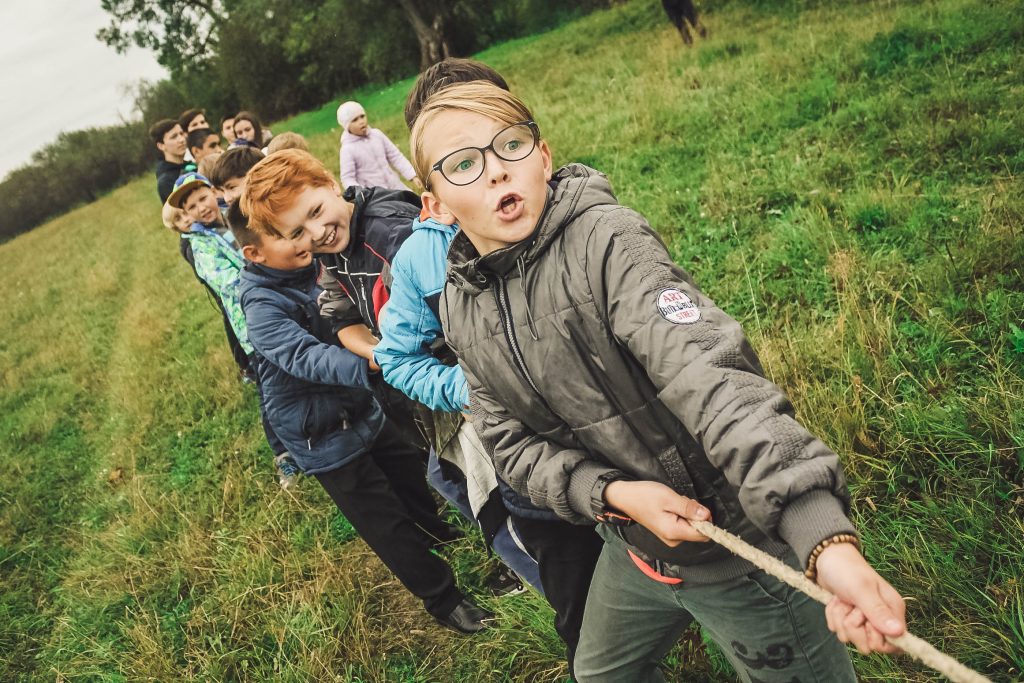
A group of children dressed in jackets are playing tug of war outdoors on a grassy field. They are lined up in a row, each pulling on a rope with determination as they participate in the activity together. The background shows more children and greenery, suggesting an active, team-based game in nature.

Picture this: a school ground buzzing with activity, where students of all abilities come together to play, learn, and grow. Inclusive school sports are not just an option; they’re an integral part of our sporting and education landscape.

The Disability Discrimination Act 1992 and Disability Standards for Education 2005 aims to ensure that students with disability have the same rights as their peers.
The Standards seek to ensure students with disability can access and participate in  education and training on the same basis as students without disability. Meaning that all schools must provide opportunities and choices that cater for all abilities.

Here we will shed light on the misconceptions surrounding inclusive sports while showcasing the remarkable impact of inclusivity in both education and sports.

# 1: Inclusion is Too Challenging

Misconception: Some believe that including students with disability in sports is logistically or physically too challenging.

Truth: Inclusion is achievable and beneficial with proper planning, adaptations, and support. Here at ASAPD we have witnessed numerous stories of determination and success, where schools and organisations across Australia have demonstrated how they’ve overcome challenges to make inclusive sports a reality.

According to ASAPD Integrity and Project Manager, Garry West-Bail, these positive experiences are “moving, enlightening and educational and provide an insight into the available participation pathways, and how students with a disability can be part of the school sports program.”

Through the utilisation of adaptive equipment, supportive coaching, and teamwork, students with disability have not only participated but excelled in various sporting activities. It’s inspiring stories like these that illustrate the true potential of inclusive sports programs.

# 2: One Size Fits All

Misconception: There’s a belief that inclusive sports require a single approach for all disabilities.

Truth: Inclusive sports celebrate diversity by tailoring activities to accommodate individual needs and abilities. Whether it’s modifying the rules of a game, offering a range of sporting options, or providing one-on-one support, the key lies in flexibility. From visually impaired athletes participating in goalball to wheelchair basketball players showcasing their skills, adaptive approaches ensure that every student can find their niche in the sporting world. Through customisation, inclusivity ensures that no one is left behind.

# 3: Separate is Equal

Misconception: The idea that separate sports programs for students with disability are acceptable and can hinder inclusion efforts.

Truth: Inclusive sports programs are essential for breaking down barriers and promoting social integration. They enable students of all abilities to learn and interact with each other, fostering empathy, understanding, and friendships. By allowing everyone to participate side by side, inclusive sports not only promote physical health but also contribute to a harmonious and inclusive society, where differences are celebrated rather than segregated.

# 4: Limited Benefits for Students with Disability

Misconception: Some doubt the benefits of sports for students with disability.

Truth: As stated by Clearinghouse for Sport, various Australian and International research has shown that inclusive sports programs have a profoundly positive impact on people with disability. Beyond the physical health benefits, such as improved cardiovascular fitness and motor skills development, participation in sports boosts self-esteem and self-confidence. Moreover, students with disability often develop essential social skills, such as teamwork, communication, and leadership, through their involvement in inclusive sports. These experiences contribute to a well-rounded education that will extend far beyond the classroom.

Inclusive school sports are not just an option; they are an opportunity for positive change and growth, benefiting all students, regardless of their ability.

If you’re interested in learning more about the diverse options, benefits, and impacts of sports and physical activities, as well as how you can actively support students with disability to participate in their communities, build their capacities, and achieve their goals, we invite you to join our course, ‘Including Students with Disability in School Sport.’ Sign up today by clicking here.

Water Polo Australia Partners with ASAPD to Enhance Inclusion in Sports

A yellow water polo ball floats in a swimming pool, centered between the logos of Water Polo Australia and the Australian Sporting Alliance for People with a Disability (ASAPD). The words "Water Polo Australia" appear on the left with a blue wave logo, while "ASAPD" and "Australian Sporting Alliance for People with a Disability" are on the right beside a circular, radiating design.

In February 2023, Water Polo Australia (WPA) and the Australian Sporting Alliance for People with a Disability (ASAPD) initiated a strategic partnership, setting the stage for a unified approach to enhance sport inclusion for individuals with disability, impairment, or limitation. This partnership aimed to tap into the collective knowledge of ASAPD, offering invaluable insights to WPA as it embarked on the process of creating its inaugural Inclusion, Diversity and Equity (IDE) strategy.

Holly Tyrrell, WPA’s General Manager of Strategy, played an instrumental role in the formation of this partnership.  She highlighted, “It has been as exciting opportunity to pilot a collaborative partnership between an NSO like water polo and ASAPD, offering the advantage of the collective voice representing all NSOD’s.”

The partnership provided a host of mutual benefits, including:

  • ASAPD representation on the WPA IDE Steering Panel, contributing expertise on disability-specific matters and WPA’s holistic approach to inclusion and intersectionality.
  • ASAPD advocating the services of its member organisations, guiding WPA in identifying specific NSODs for targeted initiatives.
  • Both organisations collaborated to provide practical advice and develop initiatives, ensuring that a disability perspective was ingrained across all WPA’s activities.
  • ASAPD endorsement of the WPA finalised strategy, underscoring its commitment to the initiative.

John Croll, Chair of ASAPD, emphasised the importance of this partnership, stating, “This collaboration is a prime example of why the ASAPD exists; to help all sporting organisations across the country become more aware, and more prepared to support people with disability in their sport and clubs. We aim to foster a movement of ‘all sports and all disabilities’, and like WPA, we encourage everyone to embrace and nurture this essential culture within their organisations.”

The partnership with ASAPD provided WPA with a direct channel, ensuring that it had the best representation, not just from a single disability organisation, but from a collective voice representing a diverse range of disabilities and limitations. As a result, WPA was well equipped to address internal barriers and pave the way for a more inclusive and safe environment, welcoming individuals with disabilities, impairments, and limitations to participate in water polo.

Miranda Frisken, General Manager of Sport Development at WPA, expressed, “We are thrilled to continue developing our partnership with ASAPD as we work hand-in-hand to support the growth of water polo by enhancing our ability to cater for disability communities engaging with our sport.” Miranda Frisken, General Manager – Sport Development, WPA.

To explore how ASAPD can support your Sporting Organisation across all areas of disability sport, inclusion, and community engagement, visit www.asapd.org

ASAPD Appoints Dr Phil Hamdorf as Inaugural Chief Executive Officer

This photo shows Dr Phil Hamdorf smiling for a photo. He is wearing a pink button-up shirt and a navy jacket. His hair is grey and he is wearing glasses.

Sydney, Monday 11 September 2023: The Australian Sporting Alliance for People with a Disability (ASAPD) announced today the appointment of Phil Hamdorf PhD GAICD as its inaugural Chief Executive Officer, effective immediately.

Dr. Hamdorf, an esteemed executive with three decades’ experience in health, sports and public administration, was appointed following an extensive month-long search that attracted outstanding talent from both Australia and overseas.

Throughout his career, Dr. Hamdorf has held distinguished leadership and advisory roles within government sport portfolios, in addition to serving as the President of Exercise and Sports Science Australia and Sports Medicine Australia SA.

Expressing his enthusiasm at being appointed Dr. Hamdorf stated, “There are tremendous opportunities to spearhead a unified effort in creating active and enriched lives by fostering inclusive sporting and physical sector environments.”

“As CEO of ASAPD, my primary focus will be on advocating, educating, informing, supporting, and enhancing the capacity of the broader sports sector to be fully inclusive for all individuals living with disability. I’m honoured to take on this privileged position.”

John Croll AM, Independent Chair of the Board of Directors at ASAPD, was confident with the appointment commenting, “Phil’s extensive leadership experience in this sector, coupled with his proven ability to unite people, will play a critical role in the delivery of our strategic plans. Not only is he the most qualified individual for this important position, but he is also a true champion for inclusivity; and with his clear vision, I am certain he will drive ASAPD forward.”

ASAPD represents a collaborative initiative between eight participating Australian National Sporting Organisations for People with Disabilities (NSODs), all of whom have joined forces to establish a unified voice in their quest to enhance sports and physical activity accessibility for individuals with disabilities, impairments, or limitations. Ultimately, this initiative supports the diverse communities they collectively represent.

For more information about ASAPD visit www.asapd.org