Q&A with Katie Kelly OAM PLY

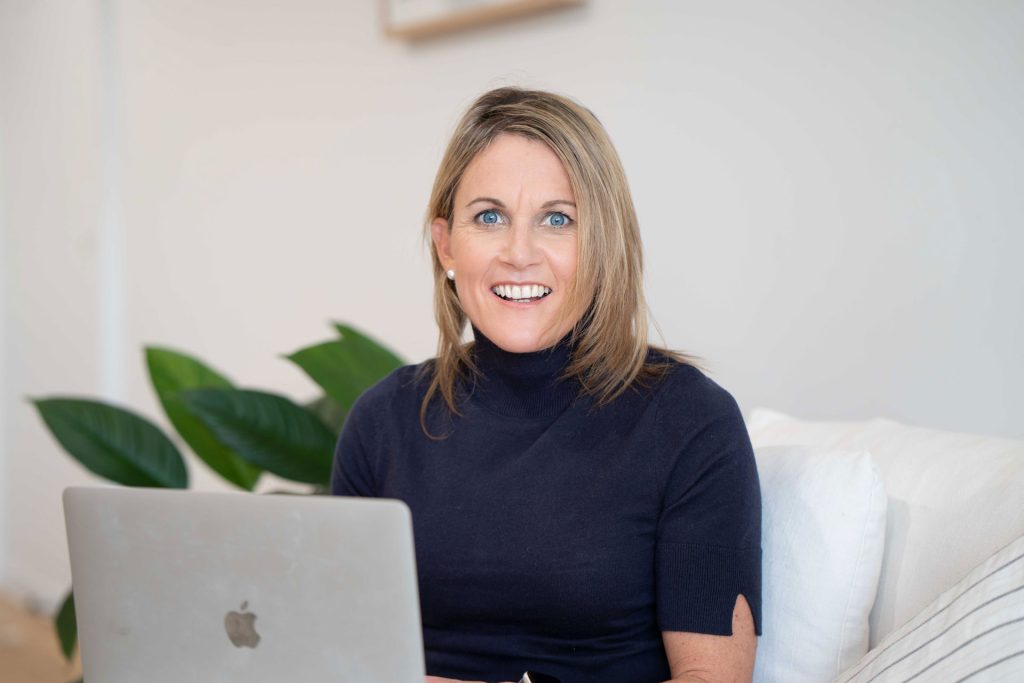
Photo shows Katie Kelly sitting down at a desk with a laptop. She is wearing a navy turtle neck with short sleeves and she is smiling.

We were thrilled to catch up recently with one of ASAPD’s Ambassadors, Katie Kelly OAM PLY, a two-time Paralympian, Founder of Sport Access Foundation and a leading advocate for diversity and inclusion.

Katie won Australia’s first Gold medal in Paratriathlon at the Rio 2016 Paralympics and her final race was at the Tokyo 2020 Paralympics where she finished 6th in September 2021. Her remarkable career includes two Paratriathlon World Championships, and a lifelong commitment to promoting diversity that started as a 15 year old lobbying  for better coverage of women’s sport, and her role on the local council’s Recreation Access Committee in 1995 to improve access to Sport.

Passionate about creating equal opportunities, Katie founded the Sport Access Foundation, a registered charity that provides sporting grants for young Australians with disabilities. She has received more than 500 grant applications nationwide, over 7 years, with over $75,000 grants provided and made a significant impact.

Living with Usher Syndrome, which causes hearing and vision loss, Katie’s story epitomises positivity and resilience. Katie is also dedicated to advancing opportunities for women in sports and improving accessibility for all Australians with disabilities.

Welcome and thank you for joining us, Katie! We’d love for you to share with us your sporting journey and what inspired you to become a professional triathlete?

When I was younger, basketball was my passion. However, as my eyesight deteriorated, playing sports that required peripheral vision became increasingly challenging.  

In my early twenties, I transitioned to half marathons and marathons, before eventually venturing into triathlons where I completed my first Ironman at Port Macquarie in my mid-thirties. I loved competing in the sport and over time I would have my coach join me as my running guide. 

A few years on, riding solo became unsafe, and at 39 years old, my ophthalmologist advised me to stop riding altogether. Following that appointment, I contacted Triathlon Australia, to inquire about participating in the Hawaii Ironman as a triathlete with low vision. During that conversation, they asked if I would be interested in representing Australia in the Rio 2016 Paralympics. 18 months after that phone call, I found myself standing on a podium with Michellie Jones as my Guide having won the Gold medal. It was an incredible turnaround on many levels. The opportunity to represent Australia at the highest level in the inaugural Para-triathlon race at the Paralympics was such a great honour and moment in time that will always stay with me.  


Congratulations on your outstanding sporting achievements. What was one of your most memorable competition experiences and what did you learn from it?

Certainly it is without doubt winning the gold medal in Rio. It’s difficult to fully capture the significance of that moment in words. However, I do know and am very grateful for what that this win provided me with the privilege and a platform to further my advocacy for disability rights and inclusion.


As an advocate for inclusivity and equality in sports, do you think societal perceptions of disability have changed in recent years?

It has improved. During my early career, I was hesitant to disclose my disability as a young graduate. I am hopeful that nowadays people, especially the younger generation, feel more confident in openly discussing their disabilities without fear of discrimination or misconceptions. 


Are there any particular movements, initiatives, or factors such as increased accessibility in workplaces that you believe have had a significant impact on promoting inclusivity and equality for people with disabilities?

It’s clear to me that the organisations that are thinking more about their culture and leaders are challenging their unconscious bias and ableism to remove barriers for people with disability to be employed.  I strongly encourage all organisations to keep questioning how they can be more inclusive and to dive deeper to better understand discrimination types as disablism and ableism – and if they do this – they will have more success with creating authentic and inclusive workplaces.

We all also need to consider the power of words, that is the game changer. The words that people use can be a real barrier to people with disabilities and prevent their opportunities for education, employment and social opportunities. It is critical that organisations and communities such as sports clubs, think about improving their language in their environments, so people feel comfortable to be their true self and included. 


Resilience and mental strength are often challenges for aspiring athletes. Can you share strategies you’ve developed to overcome obstacles and maintain a positive mindset?

There are many layers to this, but I think in essence, it comes down to the enjoyment you have and that the team around you is a healthy and happy place to be, and then your own mindset and what story you tell yourself each day, each race and your willingness to change or shift that narrative or mindset.

What advice would you give to Australians with disabilities who are uncertain about where to begin their sporting journey?

My suggestion would be to reach out to your school’s sports teacher for guidance. They can provide valuable assistance in getting started. Additionally, I recommend contacting your local council, as they typically maintain a list of inclusive sports activities in the area. Another helpful resource is organisations like ASAPD and their members, who specialise in supporting individuals with disabilities in sports and can provide further assistance in initiating your sporting journey.

Brisbane 2032 will shine a light on high performance sport in Australia, what work needs to be done for disability sports ahead of the ‘big dance’?

I feel there are several areas that still require attention. Firstly, improving access to sports is crucial. There are still numerous barriers in place, especially due to the limited availability of individuals who can support people with disabilities in enjoying sports. This includes guides, handlers, assistants, carers, and support workers. Secondly, continued investments by the Australian Sports Commission (ASC) to assist councils and clubs in becoming more disability confident and inclusive. Lastly, there is a need to address equipment and facility accessibility. Many clubhouses, athletic tracks, and football ovals are not accessible to everyone, highlighting the importance of ongoing investments in our infrastructure to ensure inclusivity for all. If all these improvements can be put into action, it will most certainly be an exciting time for para sport in Australia, and one that I am looking forward to being a part of. 


What do you like to do in your down-time?

I quite often find myself tuning into the world of comedy, with Chelsea Handler and Celeste Barber being two absolute favourites. But when it comes to truly unwinding, I can’t go past ice baths followed by a sauna to chill.


Fast five: 

Top food or drink

  • Drink: Almond latte 
  • Lunch: Poke bowl
  • Fruit: Raspberries 
  • Vegetable: Broccoli 
  • Sweet: Lindt Dark Chocolate 


Top book or podcast

I’m currently listening to Dr Stacy Simms, International Exercise Physiologist and Nutrition Scientist. She was one of the first to dive into research to optimise training for female athletes. Her famous words ‘women are not little men’. 

The latest book from Dr Joe Dispenza, ‘Breaking the Habit of Being Yourself’ is also a great one to tap into if you’re feeling a little stuck.  


Top destination

  • Beach: Portugal’s Algarves which I travelled to during my European Kombie van adventure with friends – absolutely stunning. 
  • City: New York. I have been 3 times, once for the New York Marathon, another time when my brother worked there and I experienced a week of New Yorker lifestyle at its best, then the last time with my sister, and whilst we spent most of it retail shopping a highlight was to also experience a NY Yankees baseball match. 
  • For the people, food and wine: Italy. One trip was for my cousin’s wedding in Rimini. Wow, fun! 


Top person

When I think of sportspeople – 

  • Cathy Freeman. It’s almost impossible to describe her impact and legacy. 
  • Dani di Toro. 7x Paralympian and 2x Co-Captain of the Australian Paralympic Team. She’s a person who has had a huge impact on so many people. 
  • Chloe Dalton and Millie Boyle. Both are outstanding women who have such compassion and humility in their advocacy for not only women’s sport but also sport for people with disability. 


In terms of advocacy – 

  • Megan Davis, with the work, dedication and generosity to help Australia heal.


Top tip

Always consider your seat of privilege and who is ‘not seated at the table’. 

ASAPD Q&A with Archie William Graham

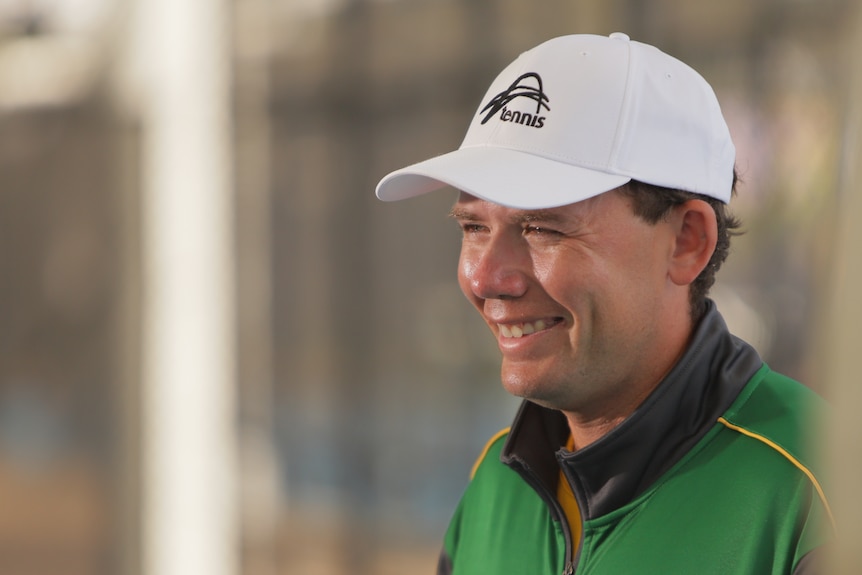
Photo shows Archie William Graham smiling in a white Tennis Australia Cap


Image by: ABC News: Chris Gillette

Archie Graham has accomplished extraordinary sporting success. Starting his tennis career at 15 years old, today, Archie holds the World #1 ranking in the PWII class, and has five world tennis singles championships to his name. 

Born with Asperger’s Syndrome, Archie not only competes against his peers with intellectual impairments but he also fearlessly challenges himself on the mainstream circuit.

Despite his success, he remains humble and is recognised for treating all players with respect, regardless of their skill level. He dedicates time to mentoring younger athletes, teaching them the importance of good sportsmanship and the attitude and hard work needed to succeed. 

A proud indigenous Australian, Archie has earned multiple Newcombe Medals recognising him as Australia’s top player with a disability, and he is eagerly anticipating the upcoming Bruce Lynton BMW Rosebowl Tennis Championships on the Gold Coast in August.

Congratulations on your recent success at the 2023 Virtus Global Games, Archie! Could you share with us what it means to you to win the gold medal in the II-1 men’s singles event and take back the No.1 ranking?
Thank you, the win meant a lot of things to me, initially it was a lot of happiness and relief as I had worked so hard for it.  I won my first World title in 2015 in Ecuador, and in 2019 at the Virtus Global Games in Brisbane I was Australian team captain going for title number 5 but lost to Great Britain’s Dominic Ianotti in the semi final.  We haven’t played a World event since then due to Covid.  We went to Poland last year for the European Championships and I was hoping to win back my number 1 ranking from Dominic but he wasn’t there.  So I have had to wait four years, it has been a lot of hard work and a lot of waiting and a huge relief when finally, it happened.

The Virtus Global Games is a significant event for athletes with an intellectual impairment. How did it feel to compete on such a grand stage and represent your country in an event of that magnitude?
It is always an honour and privilege to represent your country. As a proud indigenous Australian it is a great honour to represent my country and people, this was the seventh time I have been able to do that.

As someone who competes both in the mainstream circuit and against fellow international players with an intellectual impairment, how do you approach the different challenges and opportunities that each platform presents?
It doesn’t matter what environment I am in,  It is important for me to be true to myself and be who I am.  People react differently in different environments and have different ways of expressing themselves, there is no point trying to be different and fit in with someone who doesn’t treat you the same.  The tennis court is my happy place. It doesn’t matter whether I am training, playing mainstream or internationally, I want to do my best and I want to inspire younger players.

When I am on the tennis court I don’t think of myself as the world champion,  I am focussed on being me and doing my best.  I want to be an inspiration for the younger players so it is very important to me to set the standard of play and behaviour.  I am pleased if people want to beat me, but they will need to work hard for it.

Winning your first world tennis singles title at the age of 21 is an incredible achievement. Can you take us through your journey from picking up the sport at 15 to becoming a five-time world champion?

I have a brother (Lewis) and sister (Belle), we grew up with a tennis court in the backyard, we didn’t play competitively, but we had fun.  My Grandmother used to play tennis and when I was staying with her she would hit balls with me.  My competitive tennis playing started by accident.  I played a range of sports (Basketball, Volleyball, Soccer, AFL) at school (St Edmunds College) and one day the tennis team was short a player so I said I can do that, I put my hand up and started playing competitive tennis.  From there I joined my local club and started playing on the weekend.  It was here that I met my coach Stanley Cuthbert.

I played a bit at the Special Olympics and one day one of the players said “You can go bigger than this at National and International level”.  We looked into it and I completed my eligibility registration with Sport Inclusion Australia and entered the 2013 Australian Tennis Championships run by Tennis Australia in Melbourne.  We didn’t know what to expect as we headed to Melbourne, but we were very surprised and pleased to win the Championship and be presented my trophy by Wally Masur.  That was the start, I have won 7 National singles titles and the 5 World singles titles since then.

Tennis requires a combination of physical prowess and mental focus. Are there any specific rituals or routines that you follow before or during a match to help you get into the right mindset and perform at your best?
Preparation is very important to help me get ready and to get into the right mindset before playing.  I have my set of dynamic warm up exercises that I go through including band work,  footwork and stretching. I also use music to help me start to focus on what I am doing. When things aren’t going as well as I like on the tennis court I take my time during the breaks to sit in the chair, reset and take my mind back to where I was doing well.

Alongside your individual success, you also won medals in the II-1 men’s doubles, II-1 mixed doubles, and II-1 men’s team events. How does playing in a team setting differ from individual competition?
It is very different having someone with you on court, learning skills of communicating, talking with each other and thinking about each other.  Physically it is easier but it is harder to maintain focus as I am now focussing on two people and we need to work together.  Sometimes you also need to help lift your partner, and sometimes they need to lift me when things aren’t going right.

I do a lot of work with the Junior development squads in Queensland and I enjoy the opportunities to play doubles with the younger players and helping them on their game.

For individuals who are inspired by your journey, what are some practical steps or resources that you would recommend to those starting their journey in the disability sports sector and want to get involved in competitive sports? Additionally, what advice would you want to give to anyone starting out?
It’s not just about the disability sports sector, it’s about getting into sport and the important role sport can play in our lives to stay fit, healthy and connected.  There are some amazing opportunities within the disability sport sector and pathways which I have benefitted from.  It is important to get out there and have a go, get out of the house and meet new people.  The pathways are there with Tennis Australia and Sport Inclusion Australia and with a lot of other sports as well.

Have a go and see how far you can go!

In addition to your athletic pursuits, are there any specific initiatives or causes that you are passionate about or involved with to create awareness and support for individuals with intellectual impairments?
I am passionate about tennis and I want to give back to my community. I am currently working with Tennis Qld, coaching the junior PWII squads and supporting the National indigenous carnival.

Fast Five:
Top food – Chocolate

Top book – Tennis Australia Magazine

Top destination – Poland

Top person – Rafael Nadal

Top tip – Live your life like it’s your last day.

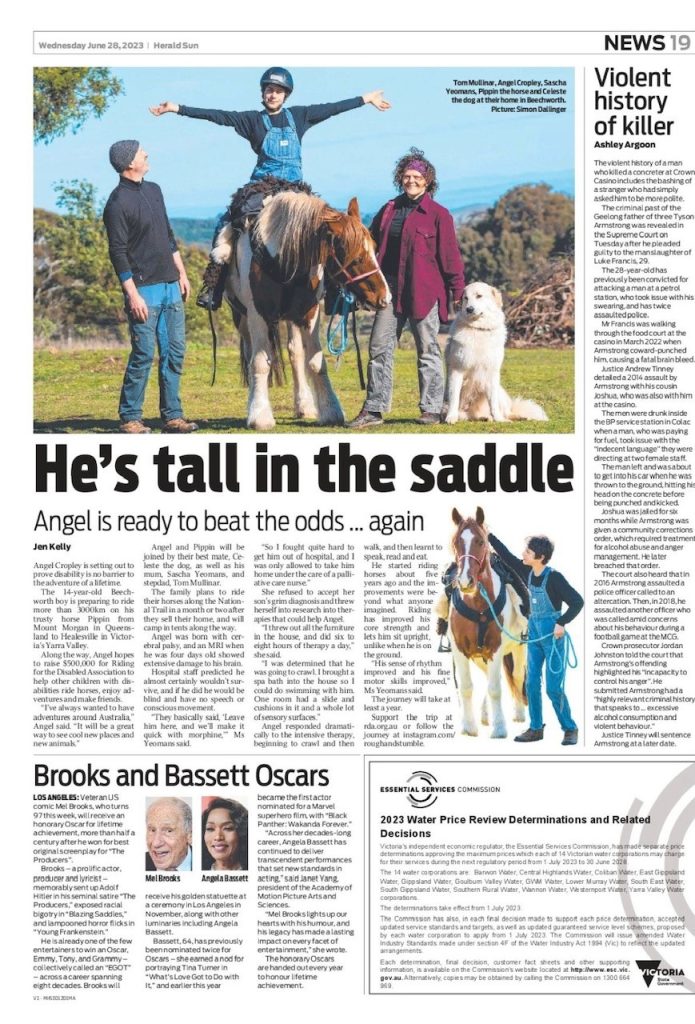
Angel’s Ride for RDA

A newspaper article features the headline "He’s tall in the saddle" with a subheadline "Angel is ready to beat the odds ... again." The article includes a photo of a young person with a brown and white horse and discusses Angel Cropley, a 14-year-old preparing to ride more than 3000 km on a horse named Pippin, aiming to prove disability is no barrier to adventure. The story highlights the journey, companions, and the goal of raising $500,000 to help other children with disabilities.

Big news! ASAPD partner, Riding for the Disabled Association of Australia (RDAA), recently made headlines in Melbourne’s leading newspaper, the Herald Sun.

This incredible story has truly touched our hearts, and we’re excited to be following Angel’s Ride to see the impact he and his parents will make raising awareness and funds.

Join us in supporting Angel’s Ride and RDAA by clicking here.